

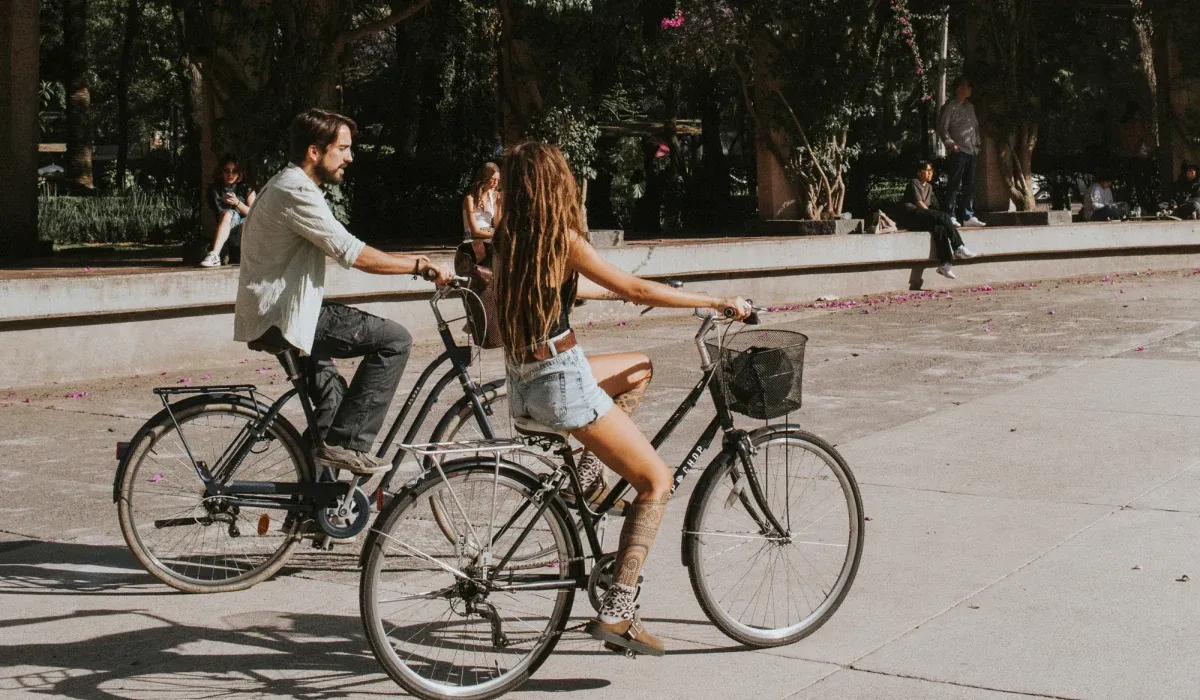
A long weekend away, and a country you already half know.
Mexico City for Californians
For years, California and Mexico City lived surprisingly far apart. Not in miles, but in imagination.
Californians knew Mexico intimately. Mexico was present in their language, their streets, their kitchens, their history. Yet when they travelled south, they often followed the familiar geography of escape: Los Cabos, Puerto Vallarta, Cancún. Mexico City belonged to another map.
Then the pandemic disturbed the habits of travel. Mexico remained comparatively accessible, and Americans began arriving in the capital in greater numbers. Some came deliberately; others discovered it almost by circumstance. What began as proximity became curiosity.
And curiosity became affection.
Today, Mexico City is an easy long weekend from California: about three hours and forty minutes nonstop from Los Angeles, with departures through the day. You land and the day is still yours.
For a Californian, the city presents a peculiar sensation: The foreign and the familiar coexist. Close enough for three nights, yet culturally distant enough to feel like a genuine departure.
Perhaps this explains part of the fascination. California's ties to Mexico are older than their border. Alta California was part of independent Mexico until 1848. Before that, it was part of New Spain.
The separation is political and relatively recent; the cultural conversation never truly ended. But proximity does not necessarily mean understanding, and Mexico City reveals another Mexico: Ancient and contemporary, ceremonial and irreverent, provincial and cosmopolitan at once.
Nowhere is this more visible than at the table.
Mexican cuisine began long before the Spanish arrived, built on corn, beans, chile, tomatoes, cacao, and the techniques of Mesoamerican civilisations. After 1521 came ingredients and traditions from Spain, itself shaped by centuries of Roman, Jewish and Islamic presence: wheat, rice, livestock, spices, and new cooking methods. African and Asian influences followed through the commercial networks of New Spain, including the Manila galleons that linked Acapulco with the Philippines for some 250 years.
The result was not the disappearance of one cuisine into another. Something more mysterious was at work: coexistence becoming transformation.
Mexico City embodies that process. It gathers the country's regions without erasing them. Oaxaca, Yucatán, Veracruz, Puebla, Michoacán and the north meet here, while a new generation of cooks continues the conversation.
But Californians return for something beyond food, museums or architecture. They return because the city feels strangely near.
Perhaps every love affair begins with this contradiction: Discovering something new and recognising something of oneself within it.
California did not suddenly discover Mexico. The two have known each other for centuries.
What California is discovering in Mexico City is another piece of a story it had already begun.
What follows is practical.
The flight, the days, the neighbourhood, the table. Everything a first visit needs, and nothing it doesn't.
How long is the flight from Los Angeles to Mexico City?
Flight time from LAX to Mexico City is about three hours and forty minutes nonstop. Flights run between Los Angeles and Mexico City throughout the day across several carriers, which is what makes the city work as a long weekend from California.
From San Francisco, the flight is closer to four and a half hours. From San Diego and Sacramento, most routes connect.
Flights arrive at Benito Juárez International Airport (MEX), east of the centre. Roma Norte is usually a thirty to forty minute drive, depending on the hour. The city's traffic changes, not the distance.
Mexico City is one or two hours ahead of California, depending on the season.
How many days do you need in Mexico City?
Three nights is the working minimum, and often the reason people come back.
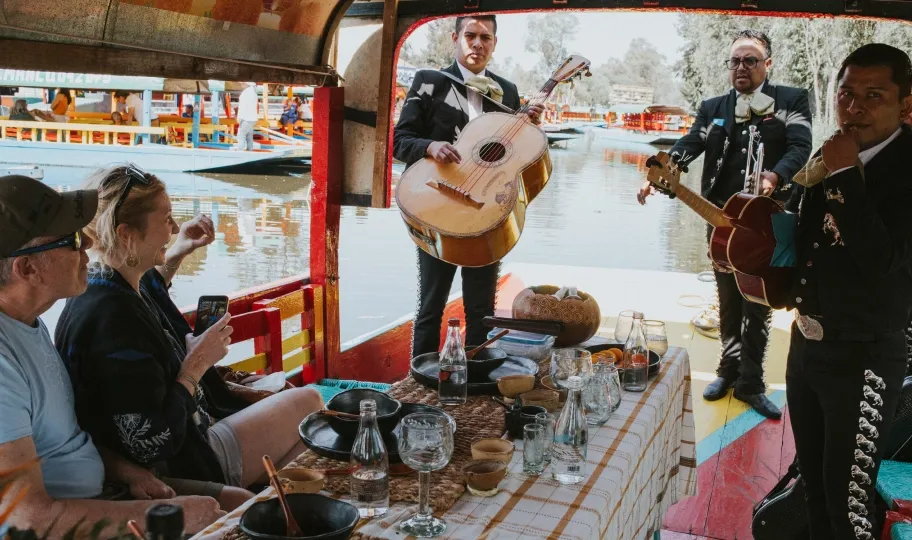
On a first trip to Mexico City, three nights gives you enough time for the historic centre and Chapultepec, a day mostly on foot through Roma Norte and Condesa, and perhaps one excursion: Teotihuacán, Xochimilco or a Barragán house.
Four or five nights change the character of the visit. The city stops being a checklist and starts becoming a place you move through at your own speed.
Where should you stay in Mexico City on a first visit?
Roma Norte is where most first-time visitors should stay in Mexico City.
It is where the city first becomes legible: a neighbourhood made for walking, where restaurants sit beside galleries and early twentieth-century houses stand beside contemporary buildings. Cafés turn into bars as the afternoon changes. You can spend three days here without constructing an itinerary.
Condesa, beside it, is greener and quieter, built around Parque México. Polanco is more formal, with major museums, shopping and several of the restaurants that draw international attention. Coyoacán and San Ángel are farther south, colonial and slower, better on a return visit than a first one.
For a closer look at the neighbourhood itself, see the Roma Norte guide.

When is the best time to visit Mexico City?
November through April, during the dry season.
Late March brings the jacarandas, when parts of Roma Norte turn violet for a few weeks. February is art week: Zona Maco, Material and Salón ACME, when the city fills with the contemporary art world.
Rain arrives from June through September, usually in the late afternoon and rarely for the entire day.
For more on the galleries that fill up during art week, see The Essential Art Circuit in Roma Norte.
Día de Muertos and Formula 1 fall on the same day in 2026
Día de Muertos is observed on 1 and 2 November. In 2026, the Mexico City Grand Prix takes place on Sunday 1 November, putting the race and the first day of Día de Muertos on the same date.
The overlap is unusual. In recent seasons the Grand Prix has moved between late October and early November, and it does not coincide with Día de Muertos every year.
If these are your dates, plan early. It is one of the busiest stretches of the year, and hotels in Roma Norte can fill months ahead.
What should you eat in Mexico City?
Start with three things: pan dulce and café de olla in the morning, tacos al pastor carved from the trompo at night, and one long lunch built around mole or fish from the coast.
That is enough to begin understanding the city.
Mornings run slowly, dinners run late, and the tacos in between don't wait for either.
The tacos within walking distance: Tacos in Roma Norte & Condesa
The dining rooms worth booking ahead: Restaurants in Roma Norte & Condesa
The morning: Cafés & Bakeries in Roma Norte
Practical notes for a first trip to Mexico City
Mexico City sits at 2,240 metres above sea level. Most visitors notice it as shortness of breath on the first afternoon, and perhaps a lower tolerance for mezcal on the first night. Drink water and take the first day slowly.
The currency is the Mexican peso. Cards work almost everywhere, but some taquerías still prefer cash. Spanish helps, but it is not essential in the central neighbourhoods. Uber and Didi operate throughout the city and are the simplest way to get around at night.
Where to begin
If Roma Norte is where you want to begin, Colima 71 sits on Colima Street, at the centre of it.
A sixteen-studio hotel in Roma Norte, Mexico City, inside a building by Mexican architect Alberto Kalach. Art fills the house. Breakfast comes to your room. Colima 71 holds a MICHELIN Key, awarded in 2024 and again in 2025.
Everything in this guide is within walking distance or a short drive.
See the studios · Every stay includes · Signature Experiences
See you in Mexico City.
